Land Without Road Access in Malaysia: Easements and Rights of Way
What owners and buyers of landlocked land in Peninsular Malaysia can do under the National Land Code: why years of using a track give no legal right, how to agree a registered easement with a neighbour in Form 17A, how to apply to the Land Administrator for a private right of way in Form 28A, compensation and costs, how these rights end, and what to check before buying land.
Updated 25 Nov 2026 · PropertyMsia

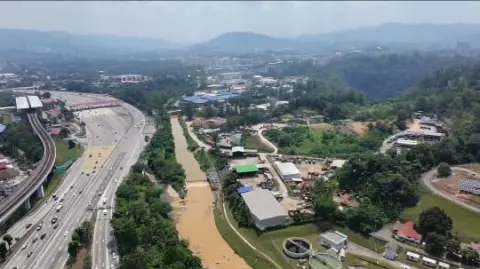
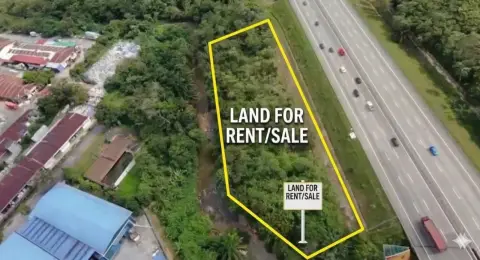
Some land can only be reached by crossing someone else's lot. Such landlocked land is hard to farm, rent out, finance or develop, and is usually worth less. The National Land Code (NLC) offers two ways to get legal access: an easement agreed with a neighbour, or a Land Administrator's right of way. This guide covers Peninsular Malaysia; Sabah and Sarawak have their own land laws. It is general information, not legal advice.
Summary
- Using a neighbour's track for many years does not create a legal right. The NLC does not allow easements by long use.
- An easement is agreed with the neighbour, signed in Form 17A and starts only when it is registered.
- If the neighbour will not agree, the owner or occupier can apply to the Land Administrator in Form 28A for a private right of way to a public road.
1. Why an old track is not enough
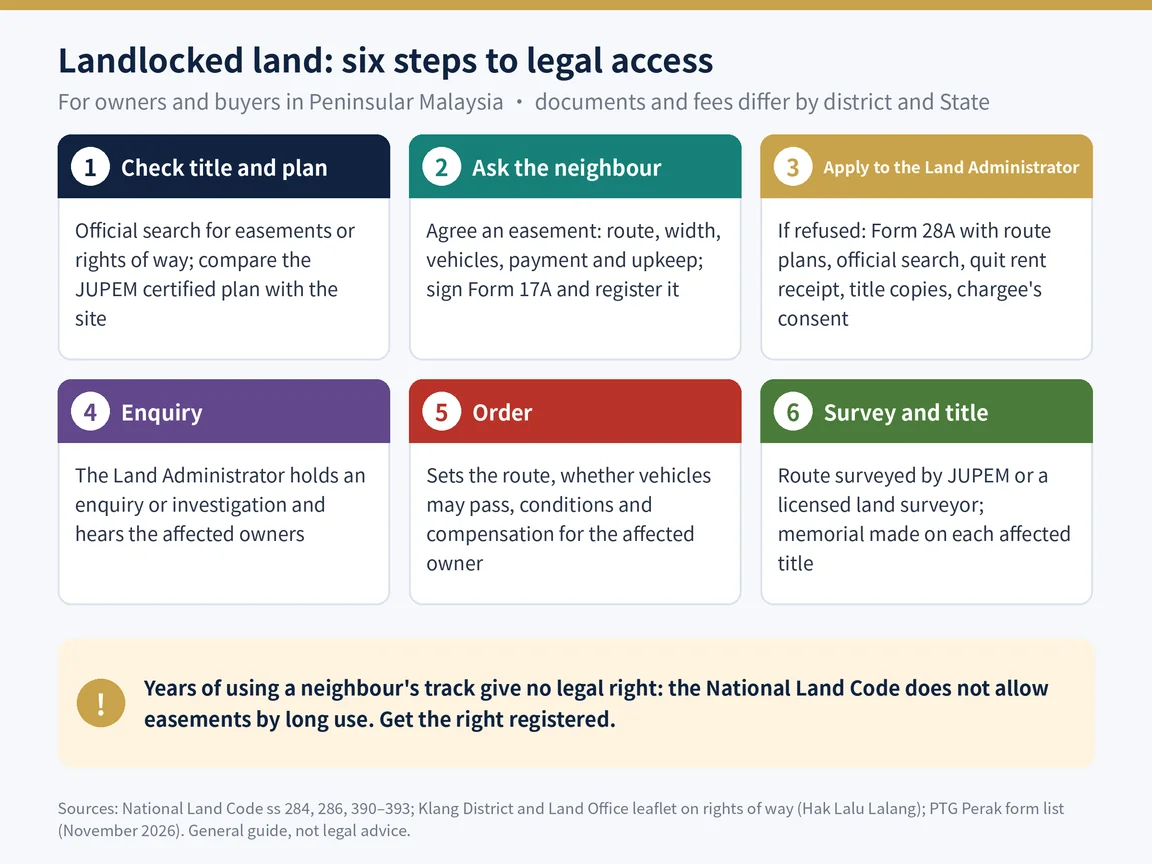
Many rural lots are reached by an earth road across the next lot, used with the neighbour's goodwill. That permission can be withdrawn, and it does not bind a new owner of the neighbouring land. Under the NLC, no easement can be gained by prescription (long, uninterrupted use) or by implication: it must be granted and registered. So find out whether the access is a public road, State land or someone's private lot.

2. Option one: an easement agreed with the neighbour
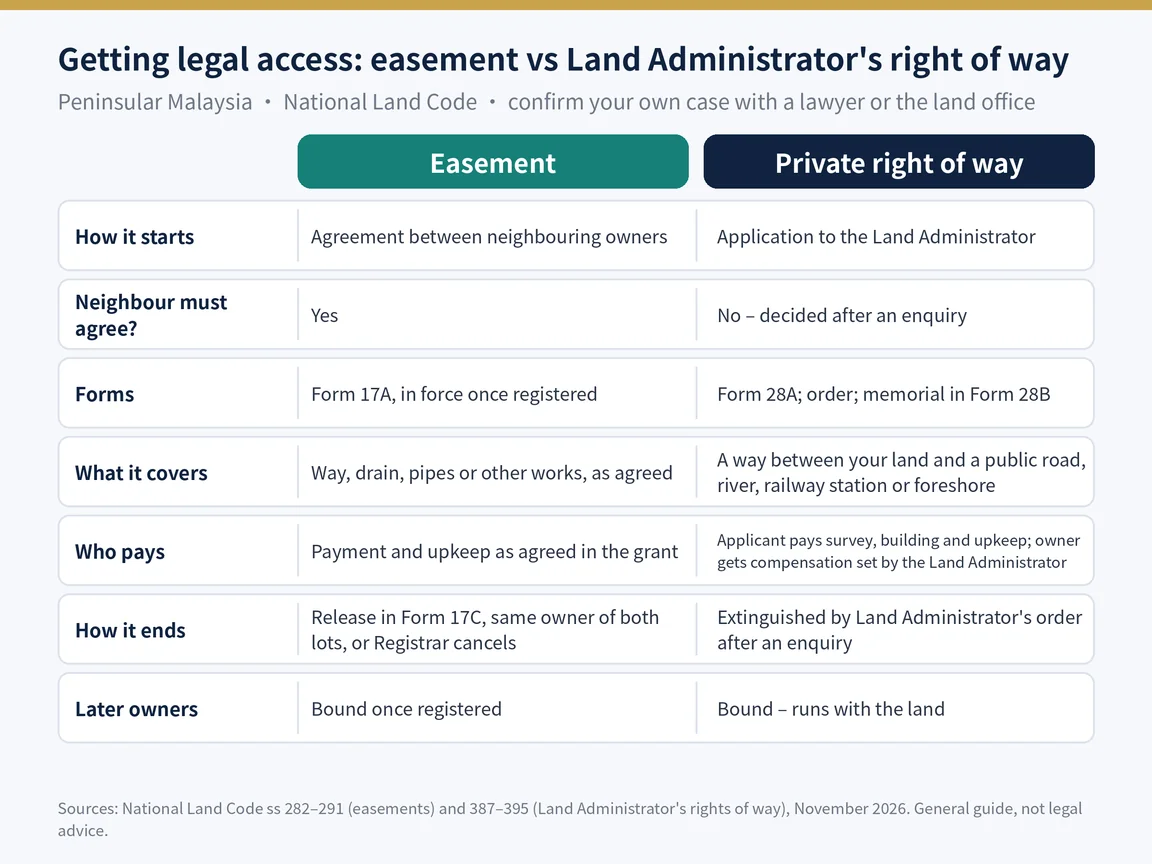
An easement is a right granted by one owner to another for the benefit of his land. The land that benefits is the dominant land; the land that carries the burden is the servient land.
- What it can cover: a right to do something on the servient land, such as passing over it or laying a drain or pipe, or a right that something should not be done there. It cannot give a right to take anything from the land or to exclusive possession.
- Footway or carriageway: a "right of footway" is for passing without animals or vehicles; a "right of carriageway" allows vehicles. If cars or lorries will use it, ask for a carriageway.
- Form and registration: the grant is made in Form 17A and the easement exists from the date it is registered, in perpetuity or for a term of years.
- Money: the grant can include payment to the neighbour and who pays to build and maintain the road or drain. These terms bind later owners.
- Consents: if the servient land is leased, tenanted or charged, the lessee, tenant or chargee must consent in the instrument. See our guide to leasing out land.
3. Option two: a Land Administrator's right of way
If no deal is possible, the NLC lets the owner or occupier of alienated land apply to the Land Administrator in Form 28A for a private right of way between the land and a public terminal, which means a public road, a river, a railway station or the foreshore.
- Enquiry: the Land Administrator investigates. If he finds it expedient, his order sets the route, whether vehicles may use it, and any conditions.
- Survey and title: the route is surveyed and noted on the title of each affected lot (a memorial in Form 28B), with the route on the plan. It binds later owners and occupiers.
- Costs and compensation: the person who benefits pays to survey, build and maintain the way. The owner of the land used is compensated for its use and for damage to trees, crops or buildings, in an amount the Land Administrator decides.
- Sharing: a nearby owner can apply in Form 28C to share an existing private right of way, on conditions that can include sharing upkeep.
Documents differ by district. The Klang land office, for example, asks for Form 28A (three copies), five route plans, an original official search, the current quit rent receipt, copies of the titles involved, and the chargee's consent if the land is charged. Fees are set by each State; Perak lists RM50 per Form 28A application. Selangor takes applications through its e-Tanah public portal.
4. How these rights end
The owner of the dominant land can release an easement in Form 17C. It also ends when both lots come under one owner (with no lease, tenancy or occupying chargee), and the Registrar can cancel one that has expired, been abandoned or become obsolete. A Land Administrator's right of way can be extinguished after an enquiry if its conditions are breached or it is no longer expedient.
5. Checks before buying land
- Official search: look for memorials of an easement or right of way, both those that benefit the lot and those that burden it. See our land purchase due diligence checklist.
- Plan vs site: compare JUPEM's certified plan with the site, and find out who owns the track you drove in on.
- Make access a condition: if access depends on a neighbour, have the easement registered before completion.
- Subdivision: when land is subdivided or partitioned, make sure every new lot can reach a road. See our subdivision guide.
Based on the National Land Code (ss 282–291, 387–395) and Selangor and Perak land office guidance, November 2026. Procedures and fees differ by State. Ask a lawyer or your land office about your own case.
Looking at land with tricky access, or want to sell a landlocked plot? Chat with PropertyMsia on WhatsApp and we will help you check the details.
Talk to a registered agent for free advice on pricing, zoning and due diligence.
Get in touch Land Listings