Unpaid Quit Rent and Land Forfeiture in Malaysia: Form 6A, Deadlines and Your Options
What every landowner should know about quit rent (cukai tanah): when it falls due and becomes arrears, how a Form 6A notice of demand works, who else can pay it, how land is forfeited for non-payment, and the options left after forfeiture: an appeal within three months or a petition to the State.
Updated 16 Nov 2026 · PropertyMsia

In short: Quit rent (cukai tanah) is a small yearly bill, but leaving it unpaid can cost you the land itself. Under the National Land Code, rent falls due on 1 January, becomes arrears on 1 June, and after a Form 6A notice of demand the Land Administrator can declare the land forfeit to the State. Idle, inherited and jointly owned land is most at risk.
1. What quit rent is and who pays it
Quit rent is the annual rent payable to the State Authority for alienated land. The rent is a debt due to the State, recoverable by court action, and this is separate from the State’s power to forfeit the land for non-payment (section 93). It must be paid by or on behalf of the registered proprietor at the land office or through channels approved by the State (section 95). It is not the same as assessment tax (cukai taksiran), which is paid to the local council.
2. When it is due
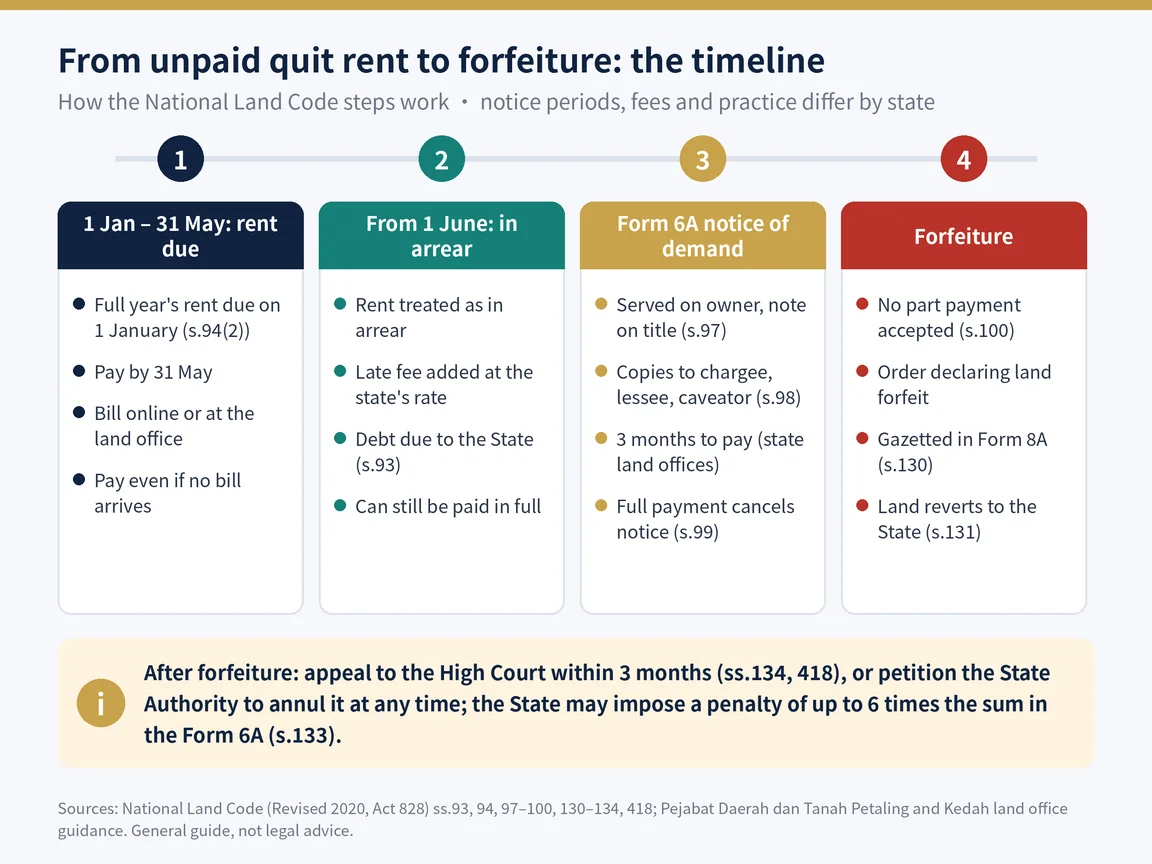
- Due date: the rent for each calendar year falls due in full on 1 January and, if unpaid, is treated as in arrear from 1 June (section 94(2)). In practice, pay between 1 January and 31 May.
- Late fee: once in arrear, a late fee is added at a rate set by the state.
- No bill is no excuse: land offices remind owners that the duty to pay does not depend on receiving a bill. Selangor, for example, stopped posting quit rent bills from January 2023; owners check and pay online through the state e-Tanah portal.
- Relief: state rules may allow remission, instalments or deferment of payment (section 94(4)). Ask your land office if paying is difficult.
3. From arrears to forfeiture
If rent is in arrear, the Land Administrator may serve a notice of demand in Form 6A on the proprietor, and a note of the notice is endorsed on the register document of title (section 97). Land offices in Selangor and Kedah state that the owner then has three months to pay the arrears and fees demanded.
- Pay the whole sum: if the full amount is paid within the time in the notice, the notice ceases to have effect and the note on the title is cancelled (section 99).
- No part payment: during the notice period the Land Administrator must not accept less than the sum demanded. If the full sum is not paid by the end of the period, he must declare the land forfeit by order (section 100).
- Gazette: the forfeiture is published in the Gazette in Form 8A and takes effect on publication (section 130).
- Effect: the land reverts to the State as State land, freed of all titles and interests, buildings on it vest in the State without compensation to the extent set out in the Code, and the rent then due is extinguished (section 131).
4. Others who can step in
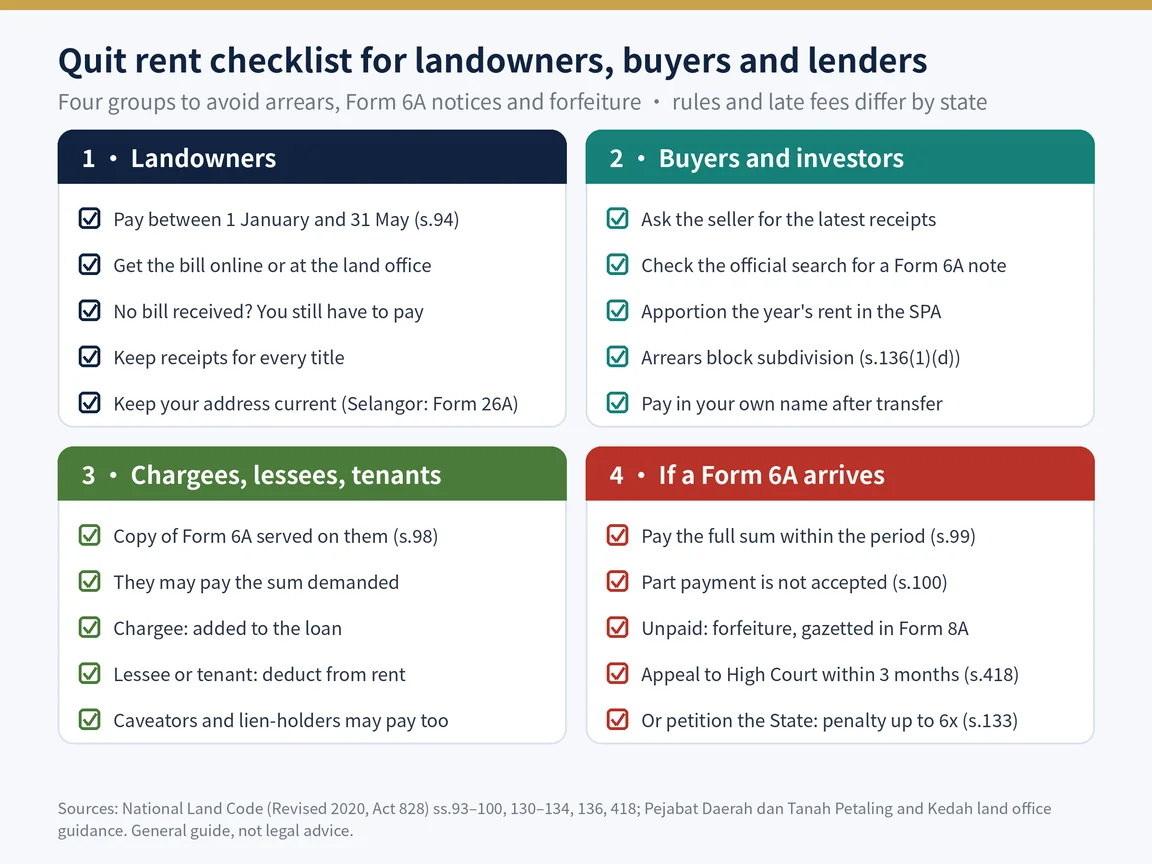
A copy of the Form 6A must also be served on anyone with a registered interest (such as a chargee or lessee), a lien-holder, a tenant whose exempt tenancy is endorsed on the title, and anyone with a claim protected by caveat. Any of them may pay the sum demanded to protect their interest (section 98). A chargee’s payment is added to the loan; others can recover it from the proprietor, and a lessee or tenant may deduct it from rent.
5. If the land has been forfeited
- Appeal: a forfeiture can only be challenged by an appeal to the High Court within three months of the decision being communicated (sections 134 and 418). The State may not re-alienate the land during that period or while an appeal is pending (section 132).
- Petition for annulment: the former proprietor may apply to the State Authority at any time to annul the forfeiture. The State decides at its absolute discretion and may require a penalty of up to six times the sum demanded in the Form 6A (section 133).
6. Practical tips for owners, buyers and investors
- Set a yearly reminder before 31 May for every title you own, and keep the receipts.
- Keep your address current with the land office so notices reach you; in Selangor this is done with Form 26A.
- Inherited or joint land: agree who pays. The State looks to the registered proprietor, not to family arrangements.
- Before buying, ask for the latest receipts and check the official search for a Form 6A note. See our land due diligence checklist and our guide to transferring land.
- Before subdividing, clear all arrears: subdivision is not approved while any land revenue is outstanding (section 136(1)(d)).
- Rent can change: the State may revise rents with the approval of the National Land Council, generally not within ten years of the last revision, and must ignore increases in value due to improvements (section 101).
For commercial units, see also our holding costs guide. This guide is general information based on the National Land Code (Revised 2020, Act 828) and published land office guidance as at November 2026. Rates, late fees and procedures differ by state. It is not legal advice; contact your land office or a lawyer about a specific title.
Own land you are not using, or looking to buy? Chat with PropertyMsia on WhatsApp and we will help you review your options.
Talk to a registered agent for free advice on pricing, zoning and due diligence.
Get in touch Land Listings