Due Diligence Checklist Before Buying a Factory or Warehouse in Malaysia
A practical checklist for buyers of factories and warehouses in Peninsular Malaysia: the industrial title and its conditions, the CCC and approved plans, the yearly fire certificate, DOSH certificates for plant left with the building, previous use and possible contamination, power supply, arrears and the RPGT retention, and any existing tenancy.
Updated 26 Nov 2026 · PropertyMsia
In short: Buying a factory is not the same as buying a shoplot. The title may allow only a named industry, a mezzanine may never have been approved, the fire certificate may have lapsed, or a previous process may have left contamination. Check the title, the building, the plant and past use, the money owed and the people involved, before you pay a deposit.
1. The industrial title
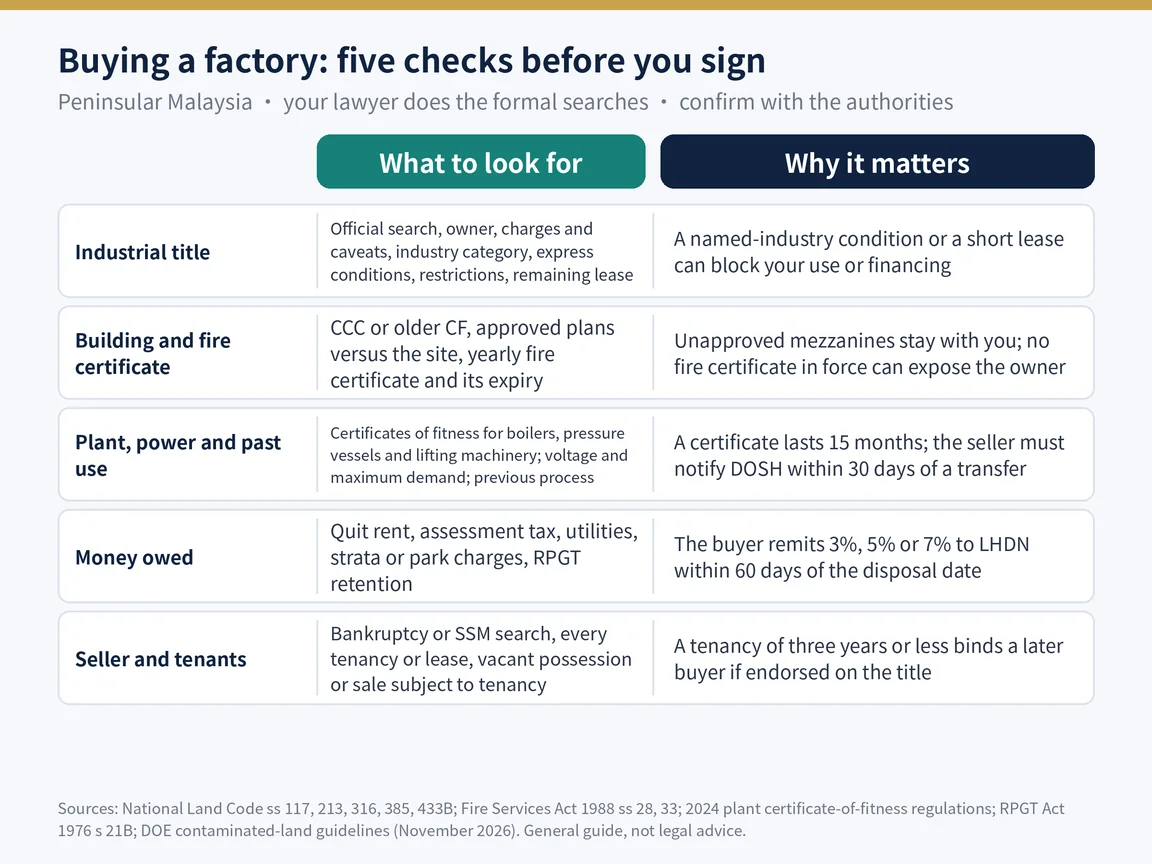
Start with an official search (carian rasmi) under section 385 of the National Land Code. It shows the registered owner, category of land use, express conditions, restrictions in interest, charges, caveats and any dealing that has been presented.
- Owner, charges and caveats: the seller should be the registered owner, or be properly authorised to sell. An existing charge is normally redeemed from the purchase price; a private caveat or lien-holder's caveat must be explained and removed before transfer.
- Category and conditions: the category should be industry (Perusahaan). Section 117 requires industrial use only, commencement within three years of the land first becoming subject to that category, and prior written consent before demolition, alteration or extension. Match any express condition to your activity. See our industrial land titles guide.
- Restrictions and tenure: some titles need State consent to transfer, charge or lease. A non-citizen or foreign company needs prior State approval under section 433B; see our foreign buyers guide. For leasehold, note the years left.
2. The building, plans and fire certificate
- CCC or CF: ask for the Certificate of Completion and Compliance, or the older Certificate of Fitness if the factory was completed before 12 April 2007. The CCC is issued by the principal submitting person, not the council.
- Approved plans versus the site: compare the building with the approved plans. Mezzanines, canopies, extra offices and roof extensions are common, and unapproved works stay with the new owner. See our guide to extending or renovating a factory.
- Fire certificate: under section 28 of the Fire Services Act 1988, every designated premises must have a fire certificate, renewed every year. If none is in force, the owner — the registered proprietor — may be fined up to RM50,000 or imprisoned for up to five years, or both. Ask for the current certificate and its expiry, and check with JBPM after you become the owner. See our factory compliance guide.
3. Plant, power and the site's past use
- Plant left with the building: if a steam boiler, pressure vessel or lifting machinery is included in the sale, ask for its certificate of fitness. Under the 2024 plant certificate-of-fitness regulations, a certificate is valid for 15 months from inspection, and the seller must notify DOSH or a licensed person within 30 days of a sale, lease, transfer or disposal.
- Power: check the voltage, the maximum demand, whether a substation sits on the land, and whose account it is. See our electricity supply guide.
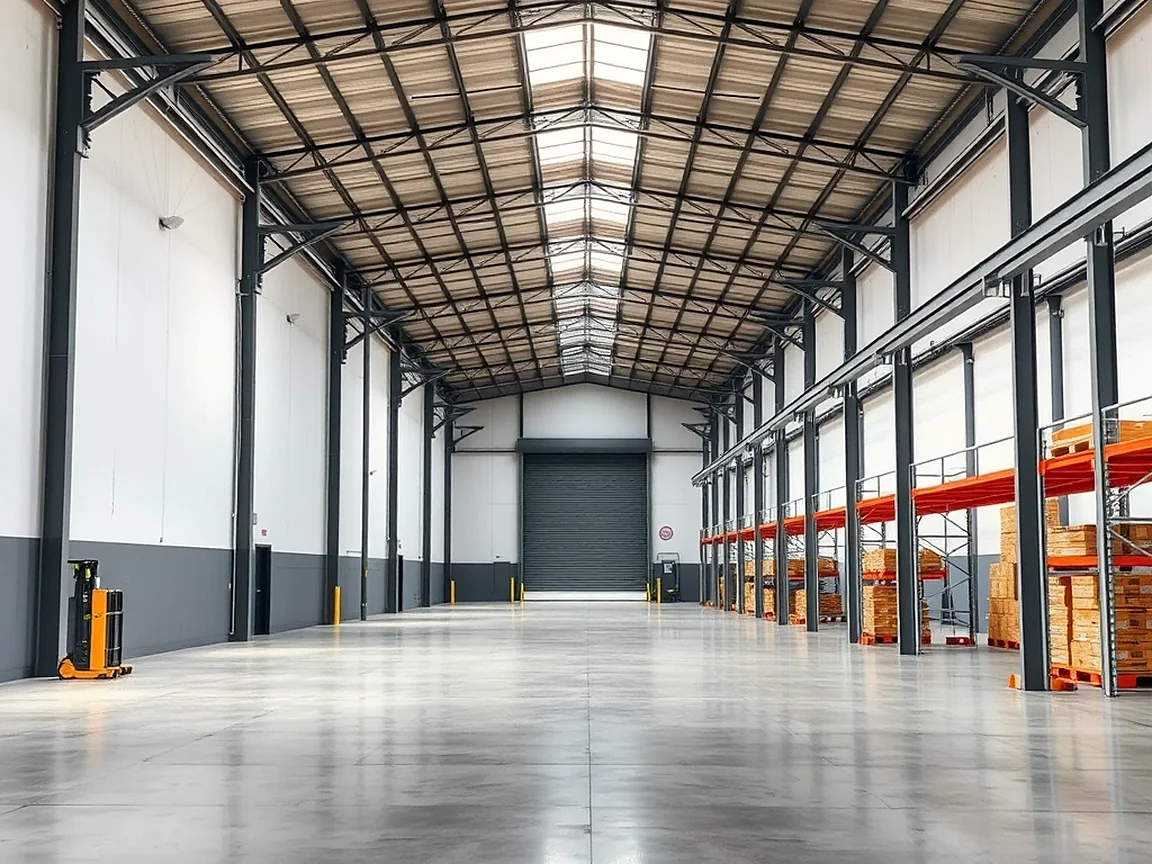
- Specifications and contamination: floor load, ceiling height, dock height and lorry access matter as much as the price; see our key specifications guide. Ask what the factory was used for, and whether scheduled waste, fuel or chemicals were kept on site. The Environmental Quality Act 1974 restricts pollution of the soil and the disposal of scheduled wastes, and the Director General may by written notice require the owner or occupier to deal with pollution. The Department of Environment's contaminated-land guidelines say the seller should disclose soil and groundwater information, and the buyer should have the site assessed before purchase.
4. The money owed
- Quit rent and assessment tax: ask for the latest paid receipts. These are usually apportioned at completion.
- Utilities and other charges: arrange final readings and the transfer of electricity and water accounts. For a strata or flatted factory, get a written statement of the maintenance fee, sinking fund and any arrears. If it is in a managed industrial park, ask about unpaid estate charges.
- RPGT retention: under section 21B of the Real Property Gains Tax Act 1976, the buyer must retain part of the price and pay it to LHDN within 60 days of the disposal date: 3% if the seller is an individual citizen or permanent resident, 5% if the seller is a Malaysian company that held the property for up to three years (3% from the fourth year), and 7% if the seller is a foreigner. Failure to pay attracts a 10% increase. See our RPGT and stamp duty guide for factories.
5. The seller, tenants and when to check
- Seller: a bankruptcy search with the Malaysian Department of Insolvency for an individual; an SSM search and a board resolution for a company.
- Tenants: get every tenancy or lease. A tenancy of three years or less binds a later buyer if it has been endorsed on the title; a lease of more than three years is registered on the title. State whether you get vacant possession or take the property subject to tenancy.
- Timing: search early, and where you can, make the earnest deposit refundable if a defect is found. Before completion, repeat the official search and remit the RPGT sum; after completion, update owner records and deal with the fire certificate and any plant certificates.
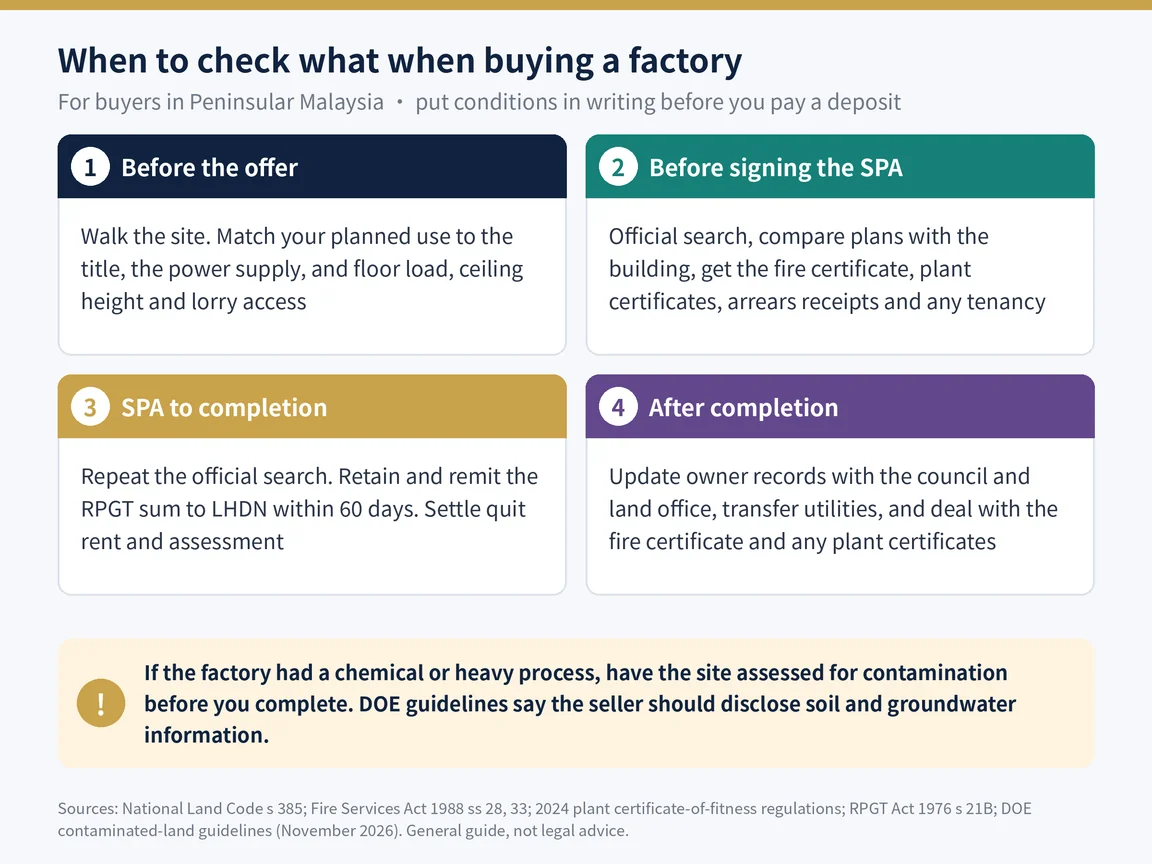
This guide is general information for Peninsular Malaysia, based on the National Land Code, the Fire Services Act 1988, the 2024 plant certificate-of-fitness regulations, the Environmental Quality Act 1974, the Department of Environment's contaminated-land guidelines and the Real Property Gains Tax Act 1976, with LHDN material as at November 2026. Sabah and Sarawak have their own laws. It is not legal advice; appoint a lawyer to carry out the searches for your purchase.
Looking at a factory or warehouse, or preparing one for sale? Contact PropertyMsia on WhatsApp.
Talk to a registered agent for free advice on pricing, zoning and due diligence.
Get in touch Industrial Listings