Electricity Supply for a Factory in Malaysia: Maximum Demand, Substation and TNB Application
A factory is only as useful as its power supply. This guide explains how TNB sets the supply for a factory by maximum demand and voltage, when a substation and extra land may be needed, which tariff names replaced E1, E2 and E3 in 2025, who must apply for supply and what documents are needed, and what owners, buyers and tenants should check before they commit.
Updated 20 Nov 2026 · PropertyMsia
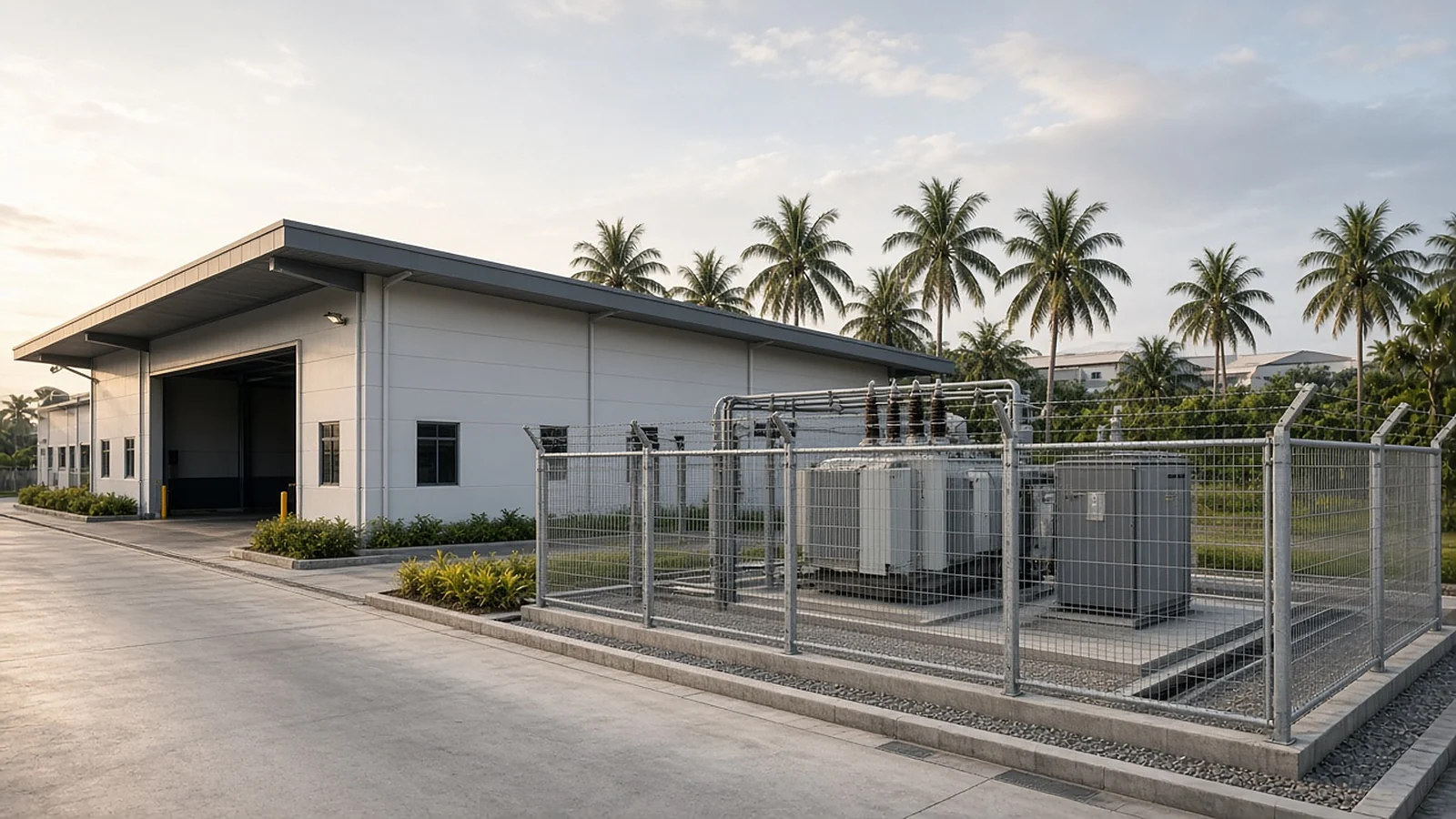
Before you buy or rent a factory, ask a simple question: can it get the power your machines need? Electricity supply decides how much equipment you can run, what tariff you pay and whether you need a substation on the land. This guide uses information published by Tenaga Nasional Berhad (TNB) and is general information, not technical or legal advice.
1. Maximum demand decides the supply
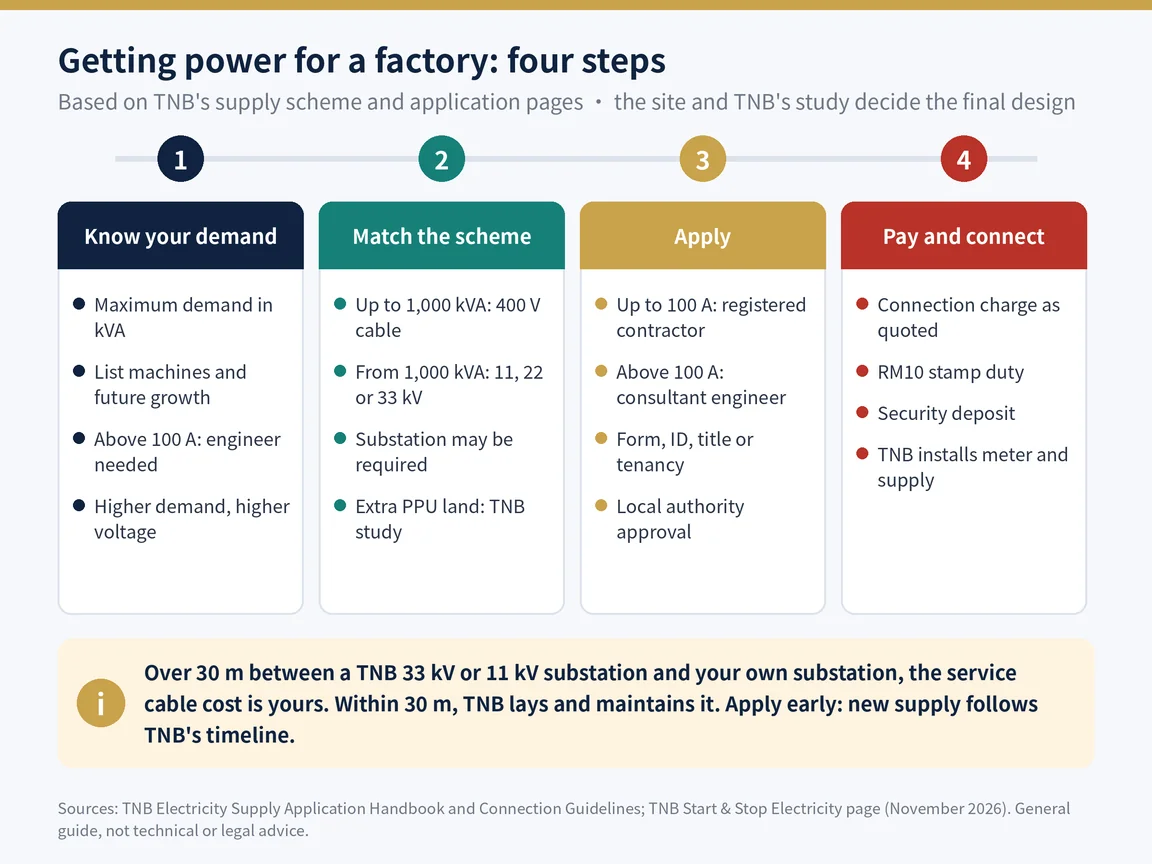
Maximum demand (MD) is the highest power your premises draw, measured in kVA. TNB’s Electricity Supply Application Handbook sets a minimum supply scheme for each MD range of a single consumer:
- Above 100 kVA to 350 kVA: 400 V, an underground cable from a feeder pillar or a new or existing substation, subject to a TNB system capability study.
- Above 350 kVA to 1,000 kVA: 400 V, a direct underground cable from a new substation.
- From 1,000 kVA: a higher voltage, fed directly from a TNB switching station: 11 kV (1,000 kVA up to below 5,000 kVA), 22 kV (up to 10,000 kVA) or 33 kV (5,000 kVA to 25,000 kVA). Extra land for a main distribution substation (PPU) may have to be allocated, depending on TNB’s study.
Smaller loads, up to 100 kVA, can usually be served from the existing low-voltage network, again subject to TNB’s study. A compact substation for a new commercial or industrial development is limited to 1,000 kVA, and needs a matching metering kiosk for a single-customer connection.
Who pays for the service cable? For a TNB 33 kV or 11 kV substation where the metering room is in TNB’s control area, TNB lays and maintains the service cable to the consumer substation if it is within 30 metres. Beyond 30 metres, the consumer bears the cost.
2. Tariff names changed in 2025
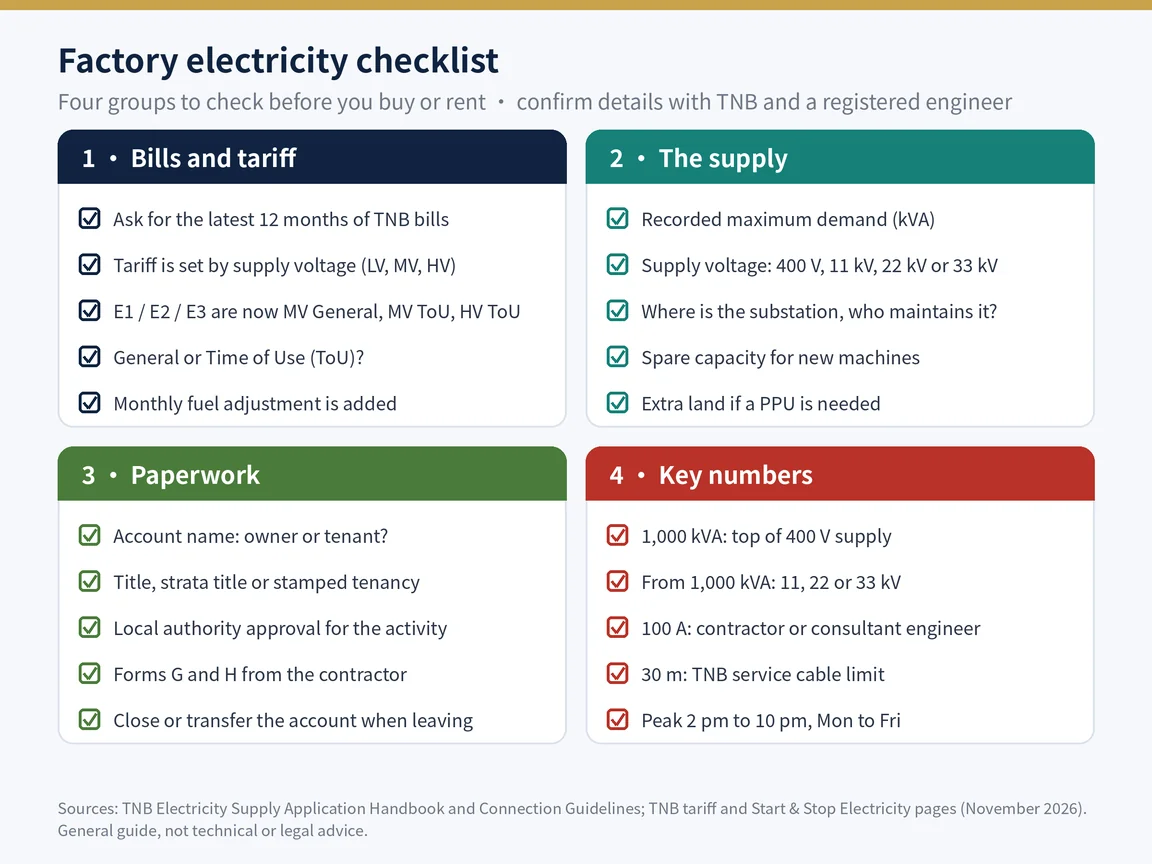
Since 1 July 2025, TNB groups customers by supply voltage, not by type of business. Low voltage is 50 V to 1 kV, medium voltage (MV) is above 1 kV to 50 kV, and high voltage (HV) is above 50 kV to 230 kV. TNB maps the old industrial names like this:
- Tariff D (low-voltage industrial) → Non-Domestic Low Voltage General or ToU.
- Tariff E1 → Non-Domestic Medium Voltage General.
- Tariff E2 → Non-Domestic Medium Voltage Time of Use (ToU).
- Tariff E3 → Non-Domestic High Voltage ToU.
Listings and old bills may still say E1, E2 or E3, so check the name on the current bill. Under ToU, weekday peak hours are 2 pm to 10 pm, and the rest of the day and weekends are off-peak. For non-domestic MV and HV ToU customers, maximum demand that occurs only in the off-peak period is not charged. A factory that can run heavy machines before 2 pm or after 10 pm may benefit. A monthly fuel adjustment (replacing the old ICPT) is added to the bill. Rates change over time, so use TNB’s latest published tariff rather than a figure from an old advertisement.
3. How to apply for supply
The route depends on the load:
- Up to 100 A: appoint an electrical contractor registered with the Energy Commission to complete the wiring and apply on your behalf.
- Above 100 A: appoint an electrical consultant engineer registered with the Board of Engineers Malaysia to apply for you. A metering schematic is required.
Documents include the signed application form, ID, proof of ownership (land title or latest title search, strata title, a duly stamped sale and purchase agreement or a proclamation of sale) or, for a tenant, a stamped tenancy agreement. For commercial or industrial activity, TNB also asks for a development order, permit, licence or any consent from the local authority. The contractor submits Form G (supervision and completion certificate), Form H (test certificate), the self-estimation form for connection charges and deposit, a location map and photos.
You pay the connection charge TNB quotes, RM10 stamp duty and the security deposit upfront; then TNB installs the meter and supply. A new supply is built to TNB’s timeline, so apply early.
4. What owners, buyers and tenants should check
- Ask for 12 months of TNB bills to see the tariff, the account name and the recorded maximum demand.
- Match demand to your machines. A supply upgrade is a new application, with a consultant engineer above 100 A.
- Find the substation. Is it on the lot, shared or TNB-owned, and who maintains it? Does the lease or sale agreement say so?
- Check the paperwork. Local authority approvals are among the documents TNB asks for; see our factory compliance guide.
- Handover. When you sell or leave, close or transfer the account. Until it is closed you stay liable for consumption. The deposit refund is the deposit less any final charge, normally within one month.
For more checks, see key specifications to check before buying a factory, renting a factory or warehouse and how a factory is valued.
This guide is based on TNB’s tariff and supply application pages and its Electricity Supply Application Handbook as at November 2026. Requirements can change and depend on the site, so confirm with TNB and a registered engineer.
Looking for a factory with the right power supply? Chat with PropertyMsia on WhatsApp and we will help you shortlist and check the details.
Talk to a registered agent for free advice on pricing, zoning and due diligence.
Get in touch Industrial Listings