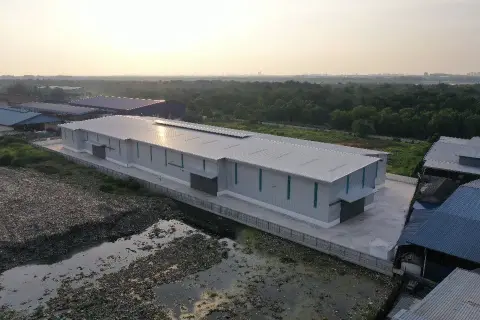
Extending or Renovating a Factory in Malaysia: Building Plan Approval, Bomba and CCC
What factory owners, buyers and tenants in Peninsular Malaysia should check before adding a mezzanine, roof extension, canopy, office block or new partitions: when council building plan approval and planning permission are needed, the industrial title condition on altering buildings, Bomba requirements and the fire certificate, the CCC for new works, penalties for unapproved structures, and checks when buying or renting a factory with additions.
Updated 23 Nov 2026 · PropertyMsia
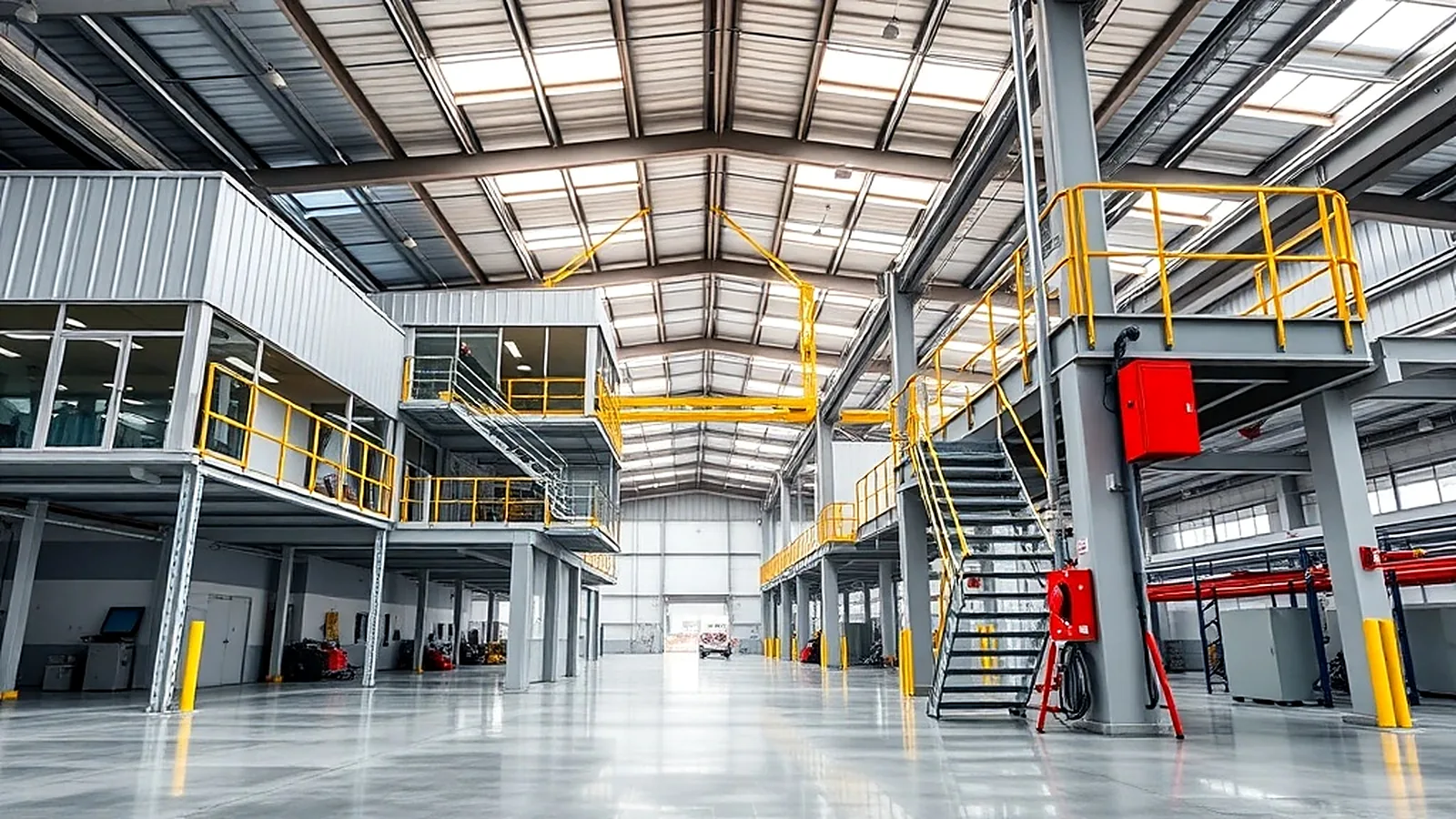
A growing business soon wants a mezzanine, a loading canopy, an office block or new partitions. On a factory these works are not just a contractor's job. In Peninsular Malaysia they are controlled by the Street, Drainage and Building Act 1974 (Act 133) and its Uniform Building By-Laws, the Town and Country Planning Act 1976 (Act 172), the conditions on the land title and the Fire Services Act 1988. Sabah and Sarawak have their own building laws. This is general information, not legal advice.
Summary
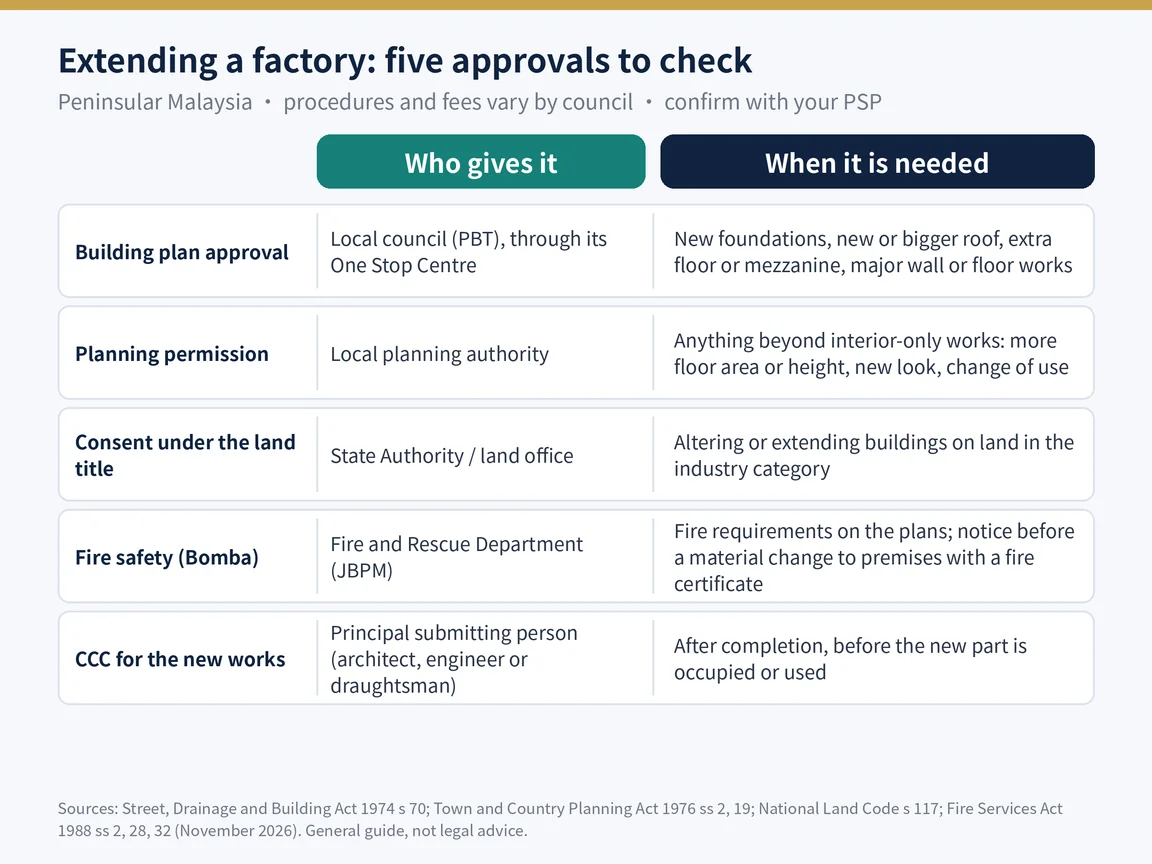
- Adding new foundations, a new or bigger roof, an extra floor or a mezzanine counts as erecting a building, so it needs the local council's written approval first.
- Planning permission is also needed unless the works are interior-only and do not add floor area, height or change the use or look of the building.
- On industrial land, the title itself says buildings cannot be altered or extended without consent.
- The new works need their own CCC, and Bomba must be told before a material change to premises with a fire certificate.
1. Which works need building plan approval
Act 133 says no one may erect a building without the council's prior written permission. "Erecting" is defined widely. It includes adding to or altering a building with new foundations or a new, partly new or bigger roof or superstructure; building an extra storey; and demolishing and rebuilding more than half of the walls and partitions, or more than half of the upper floors or roofs. Works on the same building within ten years can be added together, and any other alteration without permission is also an offence. For a factory, this usually covers a mezzanine floor, roof or canopy extension, guardhouse, new office block or major internal partitioning. Some councils have a simpler permit for minor works, so ask first.
2. Planning permission and change of use
Under Act 172, any development needs planning permission. Works are exempt only if they affect the interior and do not change the use, materially change the external appearance, add height or floor area, affect drainage, sanitation or structural soundness, or conflict with the local plan. A mezzanine adds floor area, so it is not exempt. Using a building for a purpose other than the one it was built for also needs the council's permission under Act 133.
3. Check the land title
Land in the industry category carries an implied condition that no building or installation may be demolished, altered or extended without the prior written consent of the appropriate authority. Express conditions on the title can also limit the type of building. Read it before drawing plans; our guide to industrial land titles explains the conditions.
4. The approval process
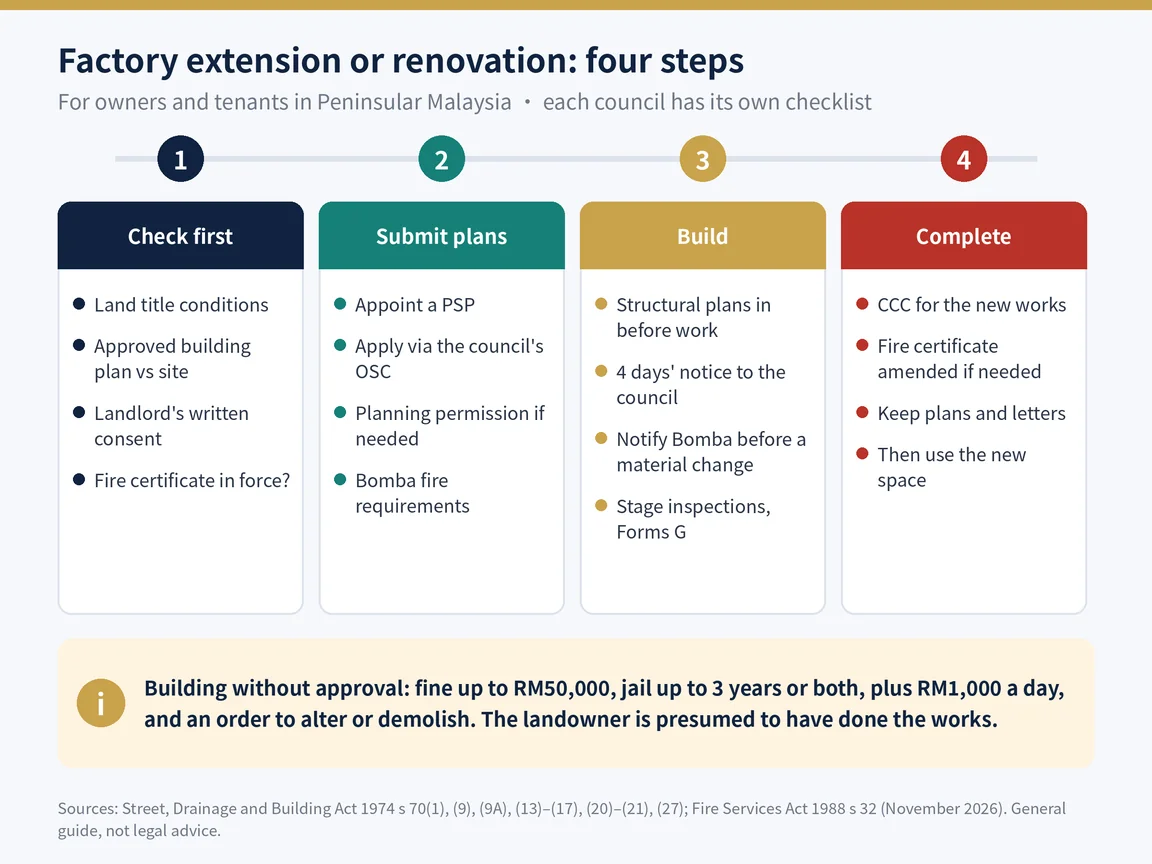
- Appoint a principal submitting person (PSP): a registered architect, professional engineer or building draughtsman, depending on the scope. The PSP and owner sign the plans, which go through the council's One Stop Centre (OSC), with planning permission first or at the same time where needed.
- Fire safety on the plans: the submission includes Bomba's (JBPM) fire safety requirements under the by-laws.
- Before work starts: submit the detailed structural plans and calculations, and give the council four days' written notice. Work must start within 12 months of plan approval.
- After completion: the PSP supervises the works and issues the Certificate of Completion and Compliance (CCC), supported by the relevant stage forms (G1 to G21). Occupying a building or part of it without a CCC is a serious offence.
5. Bomba and the fire certificate
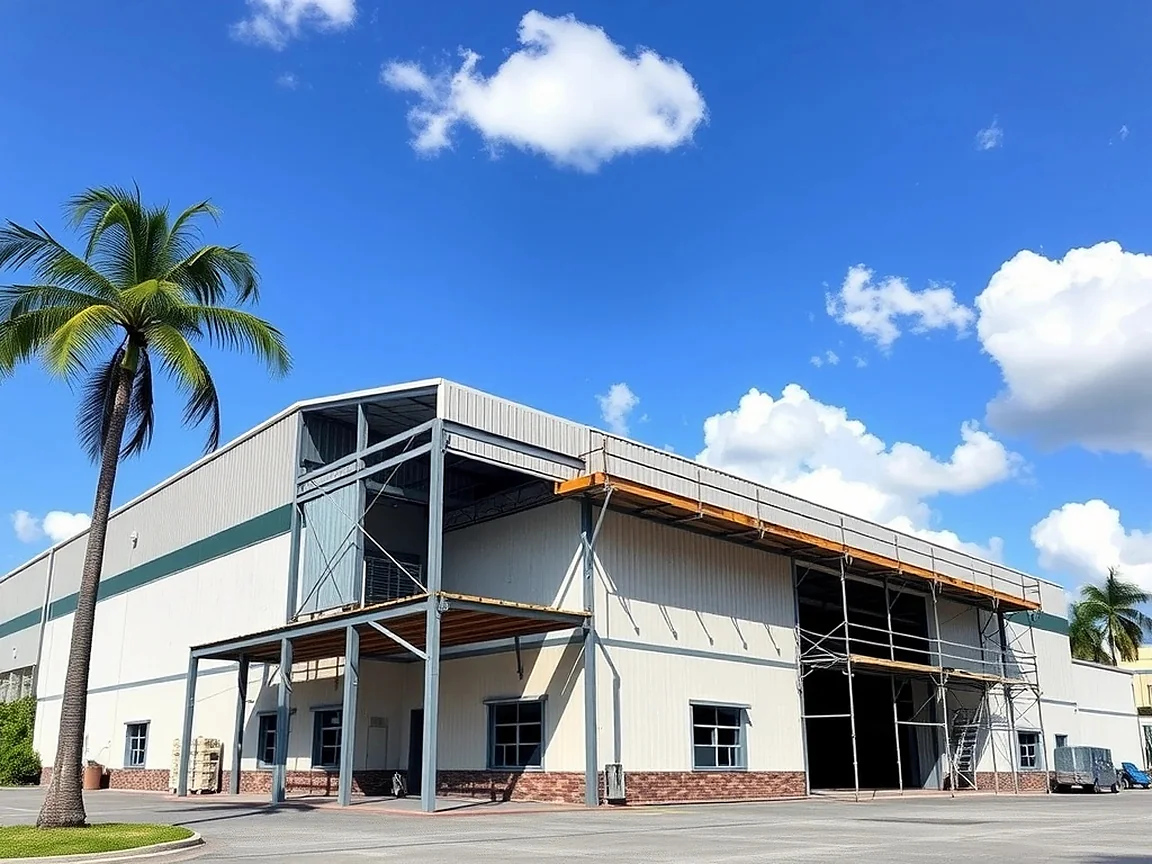
Many factories are designated premises that need a yearly fire certificate. If one is in force, the occupier must notify Bomba before starting a material change to the premises. Bomba may set the steps needed to keep fire-fighting equipment and installations adequate and then amend the certificate. A mezzanine, new rooms or high racking can block sprinklers or escape routes; an unlawful alteration that makes escape harder is a fire hazard under the Act. See our factory compliance guide for the fire certificate itself.
6. What happens if you build without approval
Erecting a building without approval or deviating from approved plans can lead to a fine of up to RM50,000, jail of up to three years, or both, plus RM1,000 a day while the offence continues, and the court can order the building altered or demolished. Applying late, before any prosecution, costs five to twenty times the normal plan fees. The law presumes that works were carried out by the owner of the land, which matters to landlords when tenants build.
7. Buying or renting a factory with additions
- Buyers: compare the building on site with the approved plans and ask for the approval letters and CCC for each addition. A valuer or lender may leave out areas that are not approved.
- Tenants: get the landlord's written consent, agree who applies and pays, and whether the works stay or are removed at the end. Our factory tenancy guide covers other terms.
- Owners: keep approved plans, approval letters and the CCC together for any sale, refinancing or licence renewal.
This guide is based on Act 133, Act 172, the National Land Code and the Fire Services Act 1988 as at November 2026. Procedures and fees vary by council. Ask a qualified professional about your own case.
Looking for a factory with room to grow, or selling one with extensions? Chat with PropertyMsia on WhatsApp and we will help you check the details.
Talk to a registered agent for free advice on pricing, zoning and due diligence.
Get in touch Industrial Listings