Industrial Land Titles in Malaysia: Category of Land Use, Conditions and State Consent
How to read a Malaysian industrial land title before you buy or rent: the industry category and its implied conditions under section 117 of the National Land Code, express conditions that narrow the use, restrictions in interest that need state consent, what a breach can cost, and how to apply for a change.
Updated 8 Nov 2026 · PropertyMsia
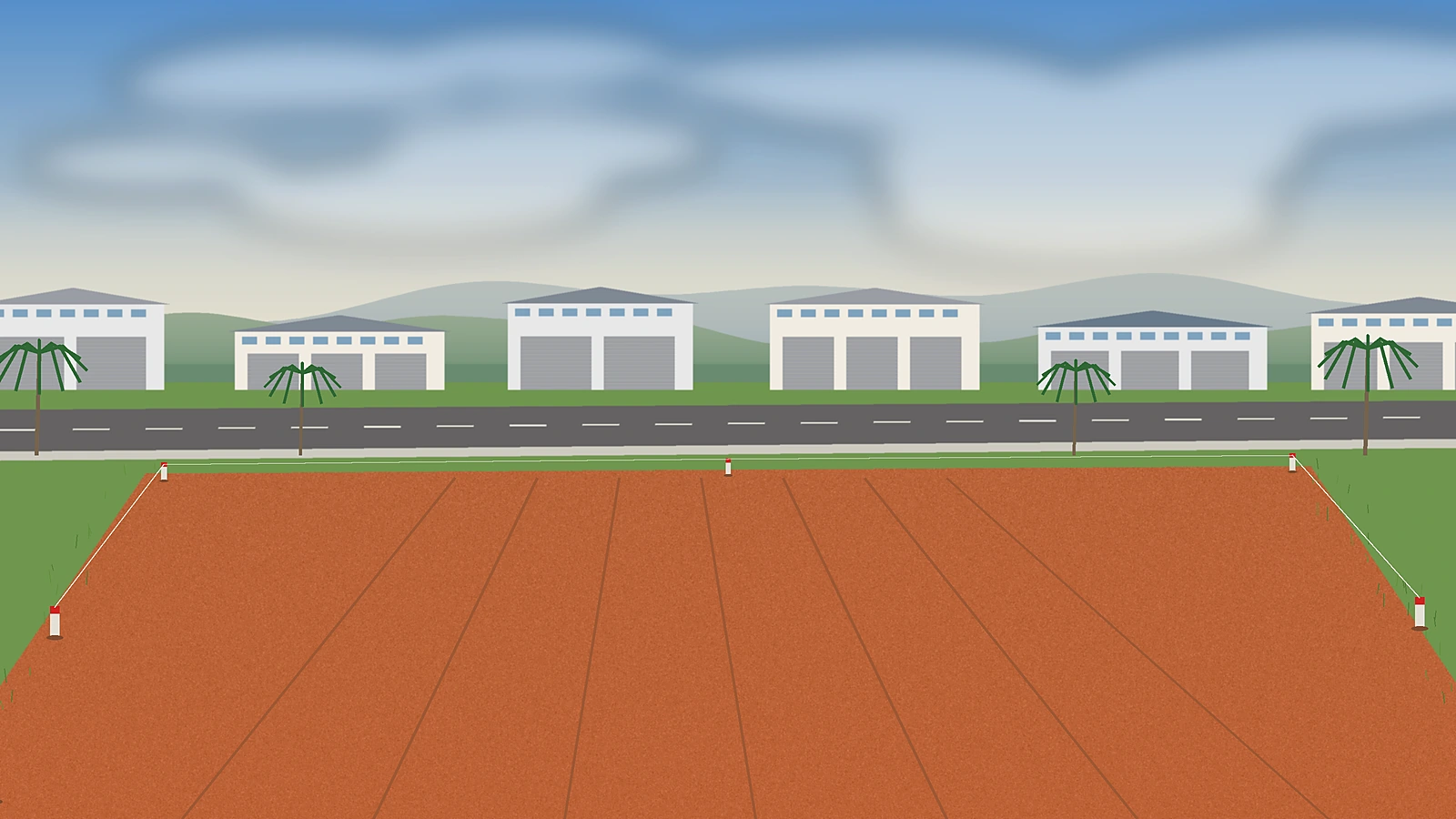
In short: A factory is only as good as its land title. Before you pay a deposit, check four things on the title: the tenure, the category of land use, any express conditions and any restrictions in interest. The category tells you the land is industrial; an express condition can narrow it to one activity; a restriction in interest can mean you need the State's consent before the land can be transferred, leased or charged.
1. Tenure and type of title
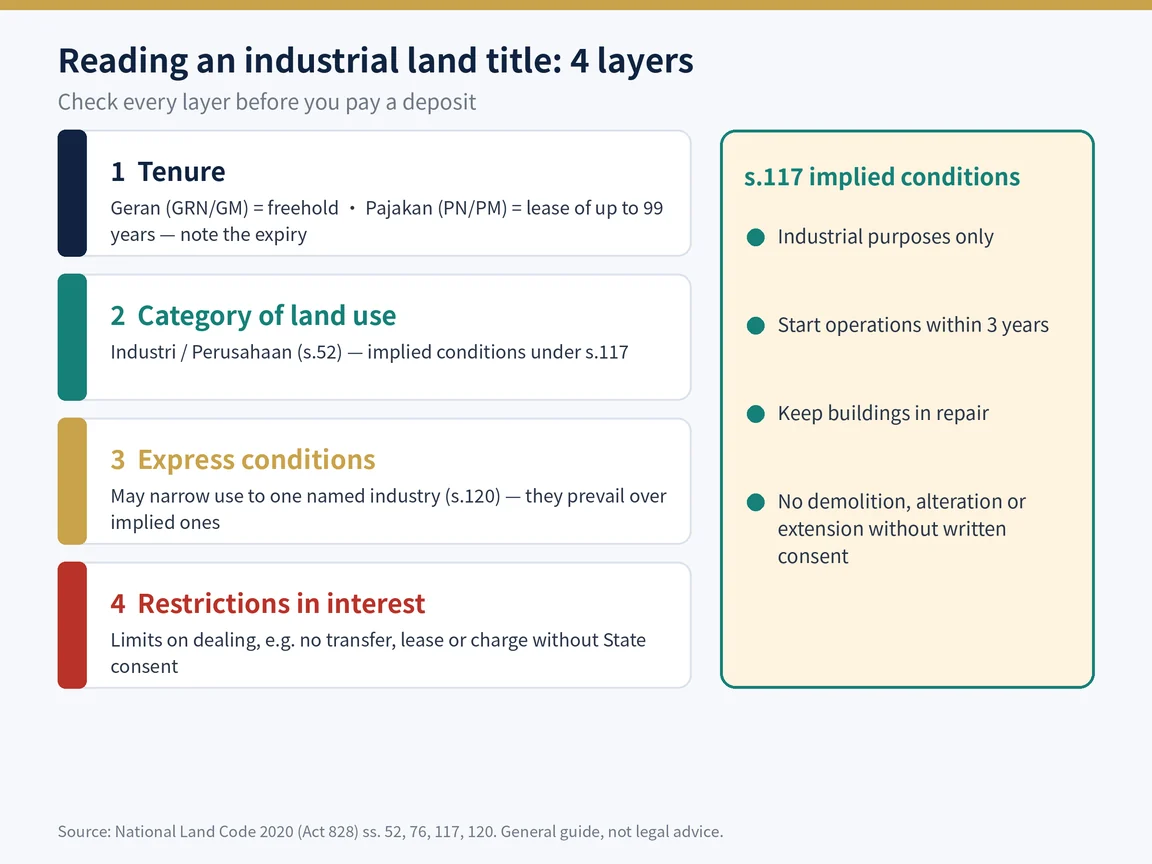
A Geran (GRN or GM) is held in perpetuity (freehold). A Pajakan (PN or PM) is a lease from the State for a term of years, which under the National Land Code 2020 (Act 828) cannot exceed 99 years. A qualified title such as HS(D) or HS(M) is issued before final survey. On leasehold industrial land, note the expiry date: the remaining term affects financing, value and resale.
2. The category of land use: “Industri” or “Perusahaan”
Section 52 of the Code creates three categories of land use: agriculture, building and industry. The category is endorsed on the title and brings its own implied conditions. For industrial land, section 117 says the land may be used only for industrial purposes: factories, workshops, foundries, warehouses, docks, jetties, railways and other buildings or installations used for manufacture, smelting, producing or distributing power, or assembling, processing, storing, transporting or distributing goods.
Two implied conditions often surprise buyers:
- Start within three years: the industry must commence operations within three years of the date the land first became subject to the industry category, and every building must be kept in repair.
- No changes without consent: no building or installation may be demolished, altered or extended without the prior written consent of the appropriate authority. A mezzanine or an extension needs proper approval, not just the owner’s agreement.
3. Express conditions can narrow the use
Under section 120 the State can add express conditions when it alienates land, and for industrial land these may cover matters such as the type of building and the purpose it may be used for. Section 117(2) says the implied conditions apply only so far as they are not inconsistent with an express condition. So if the title limits the land to one named industry, that narrower condition wins. A buyer planning a different activity should not assume “industry” covers it.
4. Restrictions in interest and state consent
A restriction in interest is a limit set by the State on the owner’s powers of dealing. A common example reads: the land may not be transferred, charged or leased without the consent of the State Authority. It must be endorsed on or referred to in the title, and the Code keeps it separate from conditions of use.
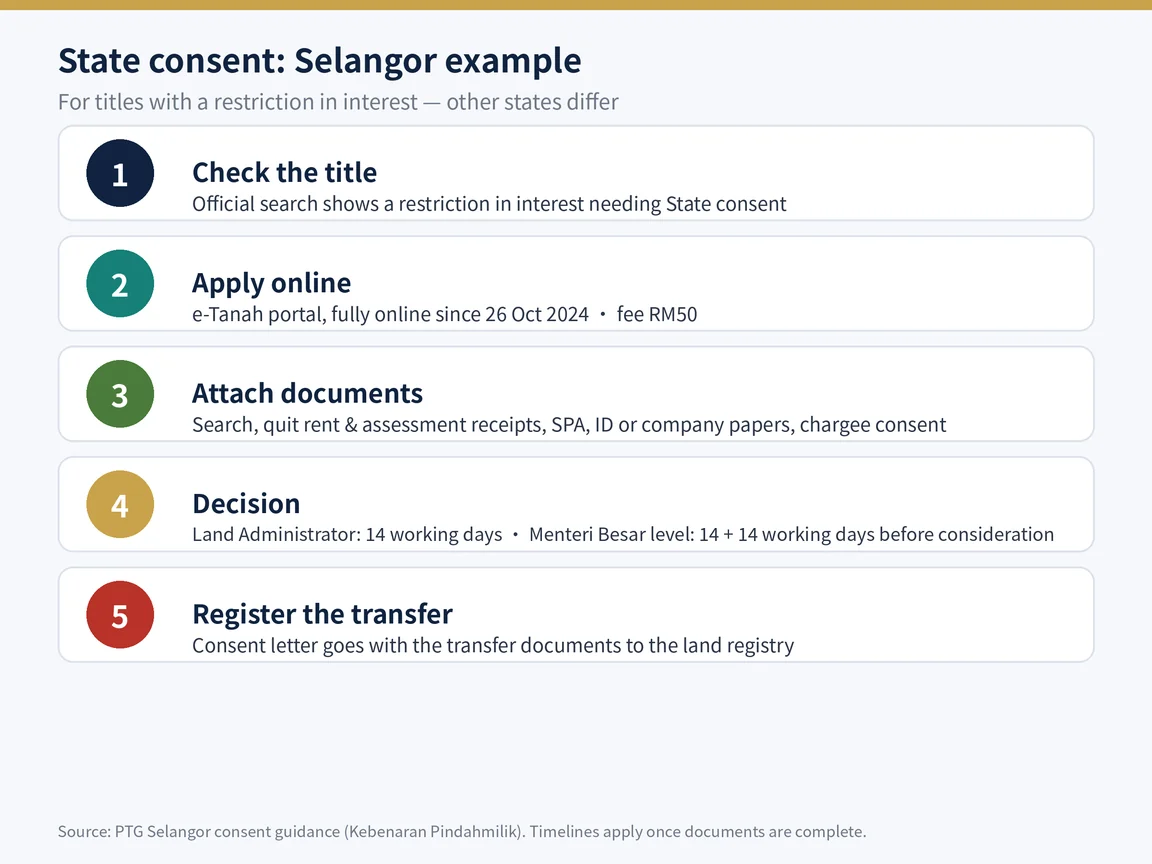
Where there is such a restriction, consent must be obtained before the transfer can be registered. Procedures differ by state. In Selangor, for example:
- Since 26 October 2024, consent applications run fully online through the e-Tanah portal, from document upload to the decision letter.
- The application fee for an individual or company is RM50.
- Applications decided by the district Land Administrator take 14 working days once the documents are complete. Those decided at the Menteri Besar level, such as a transfer from a Bumiputera owner to a non-Bumiputera buyer, take 14 working days at the district office and 14 working days at the state land office before consideration.
- Typical documents include a recent official search, quit rent and assessment receipts, the SPA, identity or company documents, and the chargee’s consent if the land is still charged.
Foreign buyers need separate State Authority approval under section 433B. Many SPAs make completion conditional on consent, so build this time into your plan.
5. What a breach of condition can cost
Under section 127, a breach of any condition makes the land liable to forfeiture to the State. Instead, the Land Administrator may impose a fine of not less than RM500, plus not less than RM100 for each day a breach continues. A buyer inherits any breach with the land, so check how it is actually used.
6. Changing a category or condition
Under section 124, the registered owner can apply to the State Authority to change the category of land use, or to rescind or amend an express condition or restriction in interest. The State may require a further premium, a new rent and other conditions. It will not consider the application unless any rent due has been paid and people with a registered interest, such as a chargee, have consented or their consent is dispensed with.
7. Quick checklist before you sign
- Get an official title search and read the category, conditions and restrictions line by line.
- Match your planned activity to the category and any express condition.
- Check the lease expiry on leasehold land.
- Ask whether state consent is needed and who applies, and make it a condition of the SPA.
- Confirm quit rent and assessment are paid, and that existing extensions were approved.
This guide is general information based on the National Land Code and published state procedures. It is not legal advice; rules and timelines vary by state, so always instruct a conveyancing lawyer.
Looking at an industrial lot or factory and unsure what the title allows? Chat with PropertyMsia on WhatsApp and we will help you read the title before you commit.
Talk to a registered agent for free advice on pricing, zoning and due diligence.
Get in touch Industrial Listings